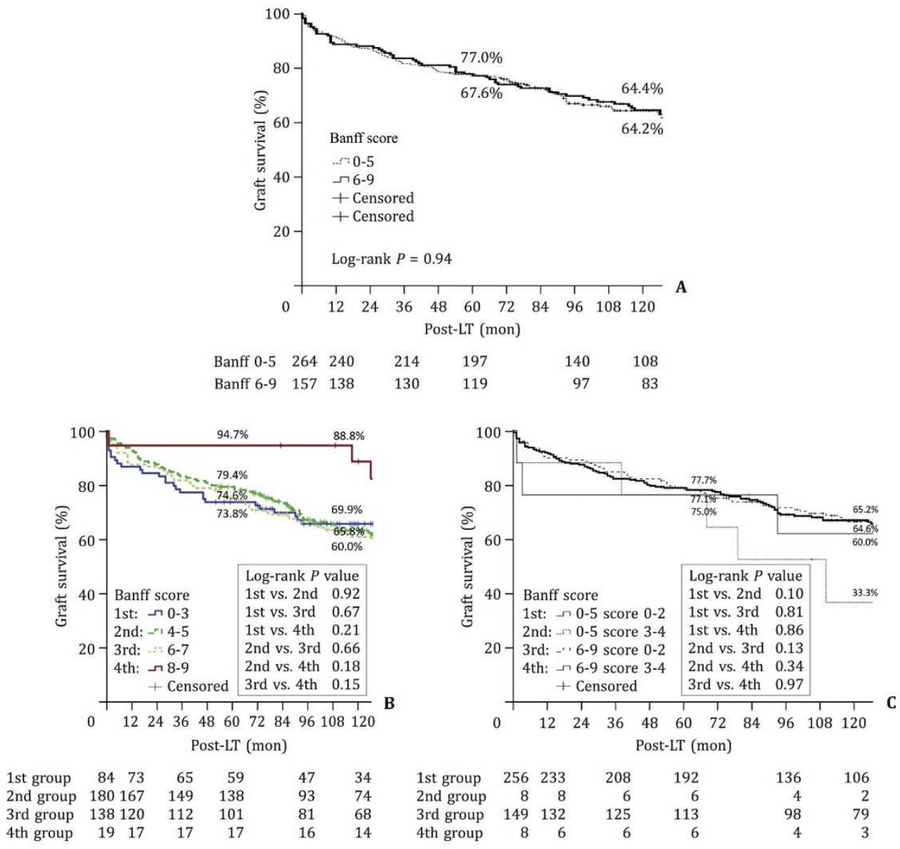
KNOXVILLE, TN, August 23, 2026 /24-7PressRelease/ — A new composite scoring system could spare one in three liver transplant recipients from unnecessary steroid treatment for early rejection. The Seven Up score—which combines routine day 7 biopsy findings with simple blood test trends—identified that while more than one third of patients showed histological signs of moderate to severe T cell mediated rejection (TCMR), only 4.5% actually required treatment. The findings suggest that most early rejection episodes resolve on their own, and that treating based on biopsy alone may expose patients to avoidable steroid related harm without improving long term outcomes.
Long‑term outcomes after liver transplantation remain hampered by complications linked to intensive immunosuppression—infections, cardiovascular events, kidney dysfunction, and metabolic disorders affect 10% to 40% of recipients. For decades, the fear of graft loss has driven high‑dose immunosuppression protocols, yet clinical experience has long hinted that some rejection episodes may resolve spontaneously. The Banff histology system—the current gold standard—relies on biopsy findings alone to guide treatment, but studies have shown that clinical suspicion correlates poorly with biopsy results, and interobserver variability is high. Based on these challenges, a more refined approach is needed to distinguish patients who truly require therapy from those who can be safely observed.
A study published (DOI: 10.1016/j.hbpd.2026.04.008) on April 30, 2026, in Hepatobiliary & Pancreatic Diseases International reports that a combined bio‑histological approach—the Seven‑Up score—can substantially reduce overtreatment of early TCMR after liver transplantation. The research was conducted at Université catholique de Louvain in Brussels, Belgium, under the leadership of Prof. Jan P. Lerut, and included 421 consecutive adult liver transplant recipients with complete follow‑up through December 2024.
The Seven‑Up score integrates two components. The histological component uses the Banff score (0–9) from a protocol biopsy performed on post‑operative day 7. The biological component—the Bio‑score (0–4)—captures dynamic changes in three routine blood markers between day 5 and day 7: rising total bilirubin, rising eosinophil count (with absolute eosinophils ≥600/μL as an additional marker), and declining platelet count. Under a biopsy‑only strategy, all 157 patients (37.3%) with Banff scores of 6–9 would have received steroid treatment. But when the Seven‑Up score was applied—requiring both Banff ≥6 and Bio‑score _2 to define clinically relevant rejection—only 19 patients (4.5%) qualified for treatment during the first 15 days. This approach spared 138 patients (32.8%) from early steroid boluses. Notably, long‑term graft and patient survival were comparable between treated and untreated groups, and the Bio‑score demonstrated good diagnostic accuracy for very early clinically relevant TCMR (area under the curve = 0.78; 95% confidence interval: 0.68–0.89; P _ 0.001).
“The key message is simple: not every rejection seen under the microscope needs to be treated,” the authors said. “For decades, we’ve been treating the biopsy rather than the patient. Our data show that the liver allograft is remarkably resilient—most early histological rejection resolves without intervention. The Seven‑Up score gives clinicians a practical, objective way to distinguish the rare cases that truly need therapy from the many that can be safely observed. In an era when we’re increasingly aware of the long‑term harms of over‑immunosuppression, this is a step toward more personalized, safer care.”
The Seven‑Up score offers an immediately implementable framework for early post‑transplant decision‑making. For centers using immunosuppression‑minimization strategies, the score can help avoid unnecessary steroid pulses—reducing the risk of infections, diabetes, and other steroid‑related complications without compromising graft survival. The biological component may also serve as a non‑invasive surrogate for liver biopsy, particularly relevant in partial liver transplantation (split and living donor) where early biopsies carry higher procedural risks. Beyond clinical practice, the score provides a more meaningful endpoint for future immunosuppression trials—moving beyond histological rejection to clinically relevant rejection that actually requires treatment.
References
DOI
10.1016/j.hbpd.2026.04.008
Original Source URL
https://doi.org/10.1016/j.hbpd.2026.04.008
About Hepatobiliary & Pancreatic Diseases International
Hepatobiliary & Pancreatic Diseases International (HBPD INT) (ISSN 1499-3872 / CN 33-1391/R), owned by the First Affiliated Hospital, Zhejiang University School of Medicine in China, publishes peer-reviewed original papers, reviews and editorials concerned with clinical practice and research in the fields of hepatobiliary and pancreatic diseases.
Chuanlink Innovations, where revolutionary ideas meet their true potential. Our name, rooted in the essence of transmission and connection, reflects our commitment to fostering innovation and facilitating the journey of ideas from inception to realization.
Related Link:
http://chuanlink-innovations.com
—
For the original version of this press release, please visit 24-7PressRelease.com here
Legal Disclaimer: The content on this page is syndicated from independent third-party providers. Kyrion Media makes no warranties or representations regarding the accuracy, completeness, legality, or reliability of the information, including text, images, videos, or licenses. If you are affiliated with this content or have any complaints, copyright concerns, or requests for removal, please contact us at retract@kyrionmedia.com with the specific URL of the content in question. We will review and address valid requests promptly.